
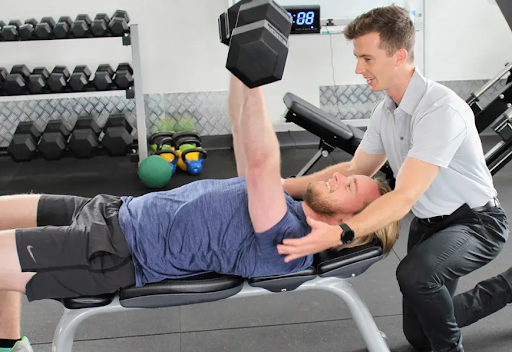
Most people don’t realise they’re exercising incorrectly until their bodies develop problems nobody anticipated. Gym goers follow routines that feel right but actually create imbalances that compound over months silently. The shoulder starts aching. The lower back develops tightness. Knees start hurting unexpectedly. Then someone blames age or genetics when actually the problem was exercise mechanics damaging joints progressively. An exercise physiologists assessment reveals something shocking. The damage wasn’t from exercising too hard. It was from exercising wrong. The body adapted to poor movement patterns, developing compensations that feel normal but slowly destroy joint health. People spend months in pain wondering what went wrong when proper exercise knowledge would have prevented everything.
The Adaptation Problem
Bodies adapt to whatever you repeatedly do, even when adaptation is harmful and destructive. Someone with weak glutes develops tight hip flexors and lower back pain because muscles compensate for weakness. A person with shoulder instability develops rotator cuff problems from overuse trying to stabilise joints incorrectly. The compensation patterns feel normal because the body normalises dysfunction over time. Exercise physiologists identify these harmful adaptations immediately, where regular trainers see nothing unusual. They watch movement patterns and spot subtle dysfunction that builds into serious problems. They understand that fixing the problem requires addressing the root cause, not the pain location. Someone with lower back pain probably has glute weakness that needs correction. Another person with shoulder pain might have thoracic spine stiffness creating shoulder overwork. Most trainers just tell people to exercise the painful area, making things worse.
The Medication Blindness
Fitness professionals don’t understand how medications affect exercise capacity and response. Beta-blockers change how hearts respond to exercise, making standard intensity guidelines completely wrong. Thyroid medication affects energy levels and recovery capacity. Pain medications mask warning signals, meaning people injure themselves without realising. Antidepressants affect sweat response and thermoregulation. Diabetes medications interact with exercise in complicated ways. Exercise physiologists understand these interactions and adjust training accordingly. They ask about medications because it matters for programming. Generic trainers never ask. People end up exercising at incorrect intensities or pushing past injury because warning signals get masked chemically.
The Recovery Deception
Gym culture glorifies hard work but ignores that fitness happens when muscles repair, not when they break down. Someone training aggressively every day accumulates fatigue their body can’t process. Hormones get disrupted. Immune function decreases. Sleep quality deteriorates. Performance actually declines even though effort increases. The person becomes frustrated thinking they’re not trying hard enough. Actually, they’re overtraining and destroying progress. Exercise physiologists understand this paradox. They intentionally include easier weeks and recovery periods when nothing happens. The reduction feels wrong to people conditioned that harder always means better. But performance improves during these supposedly wasted weeks because the body actually adapts and recovers.
Movement Blindness
People exercising for years develop blind spots about how their bodies move. They can’t see their own compensation patterns. What feels balanced might be wildly asymmetrical. What feels strong might actually be weak using compensations. Exercise physiologists film movement and show people exactly what’s happening. Someone sees themselves and gets shocked at asymmetry they never noticed. Their squat is completely crooked. Their shoulders track wrong. Their hips don’t move properly. Seeing objective evidence changes everything. People suddenly understand why they have pain and why standard solutions never worked.
The Chronic Illness Reality
People with serious conditions get told to exercise by doctors who don’t explain how. A diabetes patient increases intensity and crashes from blood sugar fluctuations nobody warned about. Someone with heart disease pushes too hard without proper monitoring. A person with arthritis does exercises that aggravate their condition. Exercise physiologists understand these diseases and how to exercise safely despite them. They know heart disease requires careful progression. Diabetes needs specific timing and intensity management. Arthritis requires particular movement patterns avoiding joint stress. This knowledge allows safe training where generic approaches create problems.
Conclusion
Working with exercise physiologists prevents the injuries and wasted effort most people experience trying to train alone. They identify problems generic trainers miss completely and that people themselves cannot see objectively. They understand medication interactions, disease management, recovery science, and movement mechanics comprehensively. Real results come from fixing what’s actually wrong rather than pushing harder randomly. People discover that their body responds differently when training aligns with actual physiology and individual needs. The frustration of plateaus and injuries disappears when programming becomes strategic and personalised. Fitness transforms from a struggle into progress when someone who understands exercise science designs the programme specifically for individual circumstances.
