
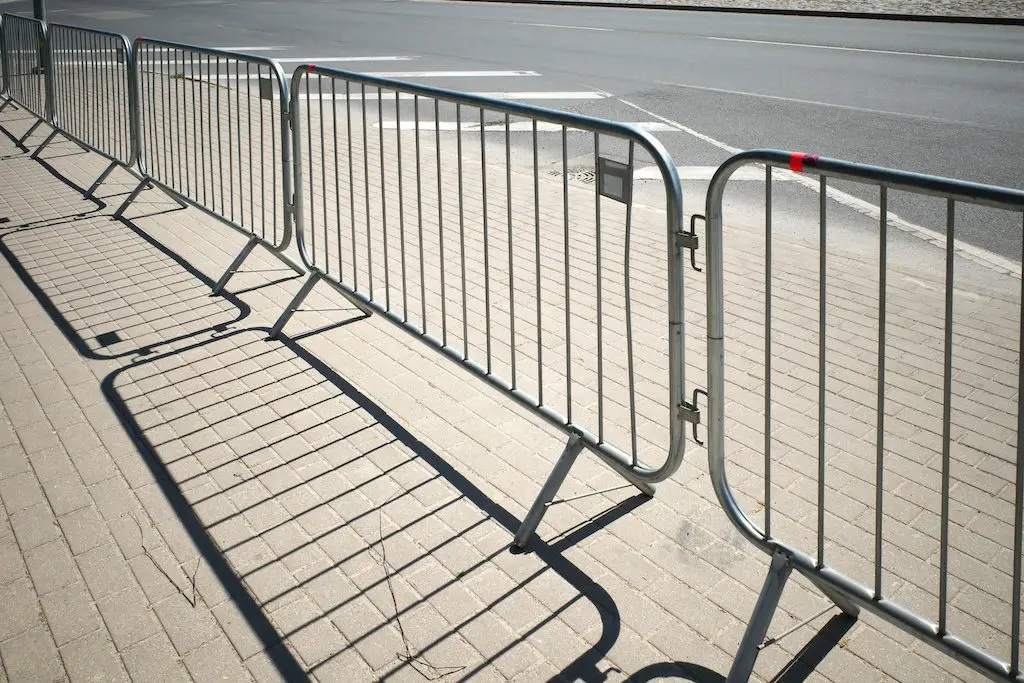
Public events need clear boundaries when guests, staff, vendors, vehicles, and equipment share the same area. Event planners, venues, municipal agencies, and security teams often use bike rack barricades to guide pedestrians, create orderly lines, protect restricted spaces, and make temporary event layouts easier to understand.
Despite their name, these barriers are not limited to bicycle parking. They are portable metal barricades shaped like traditional bike racks, with vertical bars, support feet, and frames that can be placed side by side. Their familiar appearance helps visitors quickly recognize where they should stand, walk, or avoid entering.
For temporary gatherings, these barricades provide a practical way to create structure without installing permanent fencing.
What Are Bike Rack Barricades?
Bike rack barricades are freestanding metal barriers used for pedestrian guidance and temporary crowd management. Multiple sections can be connected or lined up to create longer boundaries around event areas.
Their design makes them suitable for outdoor and indoor settings where organizers need a barrier that is visible but easy to reposition. They can form entry lines, separate viewing sections, close walkways, or protect staff and equipment zones.
Compared with cones or caution tape, metal barricades create a clearer physical boundary. Guests are less likely to cross them accidentally, and event workers do not need to rely only on repeated verbal instructions.
Where Are These Barricades Commonly Used?
These barriers appear at many public and private events. Concerts and festivals may use them around entrances, ticket checkpoints, stages, merchandise booths, food vendors, and VIP sections.
Parades and races often use them along viewing areas, starting lines, finish lines, registration points, and street crossings. They help spectators remain within approved areas while keeping the route clear for participants.
Municipal agencies may place them at public ceremonies, community gatherings, street fairs, road closures, and seasonal events. Venues may also use them for sporting events, graduations, conventions, trade shows, and outdoor programs.
Security and logistics teams often place barricades around loading zones, media areas, staff entrances, temporary equipment, and backstage access points.
How They Support Crowd Movement
Crowds tend to gather near entrances, exits, restrooms, food stands, stages, and ticketing areas. Without visible boundaries, these locations can become congested.
Barricades help create defined routes. They can separate entry and exit lanes, form queues, mark standing areas, and guide guests toward security screening or registration.
They can also create viewing boundaries at parades, performances, and sporting events. This helps keep pathways open for staff, performers, vehicles, or emergency personnel.
A clear barrier layout can also improve the visitor experience. Guests are more likely to feel comfortable when they can easily identify where to go and where lines begin.
What to Consider Before Setup
Organizers should start by reviewing the full event map. Entry points, exits, ticketing areas, performance zones, vendor spaces, restrooms, and parking routes should all be considered.
Expected attendance affects how many barriers are needed. Planning should account for peak crowd levels rather than only average turnout. A site that feels open early in the day may become crowded during scheduled performances or high-volume arrival periods.
The surface also matters. Barricades may be placed on pavement, grass, gravel, or temporary flooring. The support feet should suit the location and remain stable during use.
Outdoor events should account for wind, rain, lighting, and visibility. Emergency routes, fire lanes, medical access, and required exits must remain open throughout the event.
Delivery and setup timing should also be planned early. Teams need enough time to place, inspect, and adjust the barriers before attendees arrive.
How Security and Operations Teams Benefit
Security personnel work more effectively when boundaries are clearly marked. Barricades can define public areas, staff-only sections, backstage entrances, loading zones, and controlled access points.
They can also protect temporary equipment such as lighting, sound systems, generators, registration stations, and vendor supplies. Keeping guests away from these areas reduces interruptions and helps staff monitor the site.
Operations teams benefit from having a visual layout that everyone can follow. Vendors, volunteers, employees, contractors, and security staff can use the same boundaries when directing visitors.
During setup and breakdown, barricades can also separate pedestrian movement from vehicles, equipment carts, and delivery activity.
Renting or Buying Barricades
The choice between renting and buying depends on how often the equipment will be used. Venues and agencies that host regular events may benefit from owning a fixed inventory.
Rental may make more sense for one-time events, seasonal programs, or organizations without enough storage space. It also allows planners to adjust the number of barriers based on each event.
A small community gathering may need only a few sections, while a large festival or parade may require long barrier runs across several areas. Renting helps match the equipment quantity to the current site plan.
Final Thoughts
Bike rack barricades provide a clear and practical way to guide crowds, form lines, protect restricted areas, and support event staff. They are useful for concerts, festivals, parades, races, venues, municipal programs, and other temporary gatherings where pedestrian movement needs careful planning.
For event planners, venues, government agencies, and security teams looking for dependable metal barriers and crowd management equipment, Epic Crowd Control offers products for public events, private gatherings, and temporary site layouts. Visit the website to review barrier options for your next event.
