
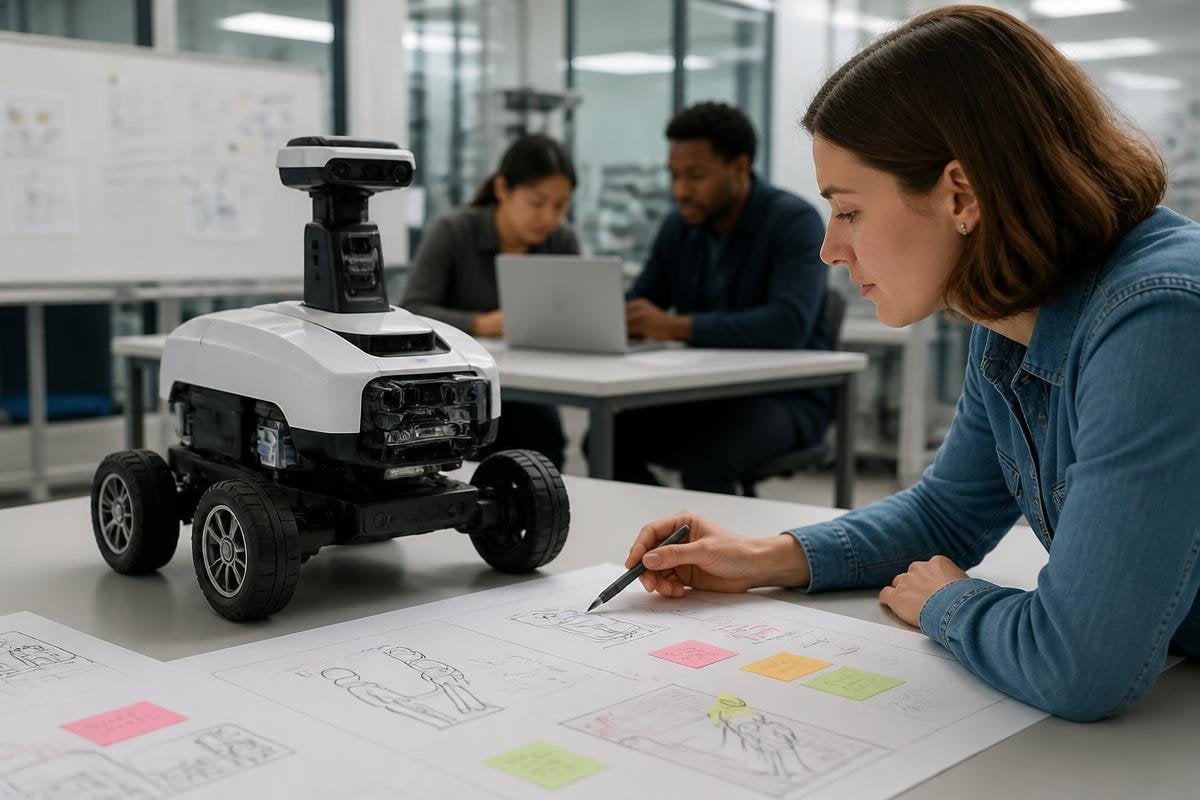
A robot can affect a person before it moves a single object. Its camera may record someone, its software may rank them, and its operator may use its decisions to control access to work or services.
Human rights checks belong in the first design review, alongside power, torque, and battery life. That gives engineers a clear question: what could this system do to a person, and what control must exist before the system ships?
Quick read
- Collect only the data the task needs, with a clear reason for each field
- Give people a way to know when a robot is watching, judging, or acting on them
- Keep a named person responsible for failures, appeals, and system changes
Start with the people affected
A robotics team usually begins with a task: move a box, inspect a site, guide a visitor, or sort an item. The rights review starts one step earlier by listing every person who may be seen, followed, scored, moved, or denied access.
That list can include workers near an autonomous mobile robot, residents recorded by a delivery machine, children near a service robot, and people whose data enters a training set.
Each group faces a different risk. A camera on a warehouse robot raises privacy questions, while a care robot raises questions about consent, dignity, and human contact.
The team should write these risks in plain language before it chooses sensors or software. A design that cannot explain who may be harmed has no clear test for safe use.
Turn rights into system rules
Human rights become useful to engineers when they appear as limits, logs, and checks. Privacy can mean local processing, short data retention, access controls, and a visible sign that recording is active. Consent can mean a clear notice, a real choice, and a way to withdraw permission.
Fair treatment needs its own tests. If a robot ranks job applicants, checks identity, or decides who receives help, the team should compare results across the groups affected. A person also needs a route to challenge a decision, with a named reviewer and a recorded reason.
Safety follows the same logic. A robot should have a reachable stop control, a defined operating area, and a rule for what happens when its sensors disagree. These are design details with a direct effect on a person’s body and freedom of movement.
Robot24.com is a robotics news platform covering businesses and autonomous systems, so its product coverage is relevant here because the deployment setting determines which rights checks a system needs.
Keep responsibility visible
Automation can make responsibility hard to find. A supplier may blame the operator, the operator may blame the software, and the software team may point to training data. The person affected still needs an answer.
Assign one role to each decision: who approves deployment, who reviews incidents, who can pause the system, and who answers complaints. Keep change logs for model updates, sensor swaps, and new operating areas. A system that worked in a lab may need a fresh review after its camera, route, or user group changes.
Human oversight also needs a real response time. A human who receives an alert after the robot has acted is recording the event, not controlling it. The design should state which actions require approval, which can happen on their own, and how quickly a person must respond.
A design check before deployment
Use this checklist during concept review and again before each new site or task:
- Affected people: list workers, visitors, residents, children, and bystanders who may meet the system
- Data purpose: write down each sensor’s purpose, storage period, access rule, and deletion step
- Consent and notice: show how people learn about recording or automated decisions, and how they refuse or withdraw permission
- Human control: name the person who can stop the robot, review an action, and change a rule
- Fairness test: compare error rates and refusals across the groups that the system may affect
- Failure record: log incidents, near misses, complaints, system updates, and the action taken
The checklist works best as a release gate, with a written answer for every point. An unanswered item goes back to the design team before field use.
I would reject any robotics plan that treats rights review as paperwork after the hardware is complete. The first design sketch should show the stop control, the data boundary, the appeal route, and the person who remains responsible when the robot gets it wrong.
