
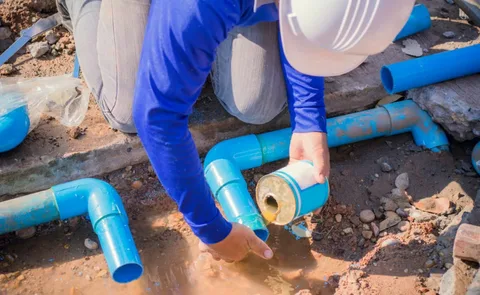
Every home relies on a highly complex, interconnected drainage network that functions entirely out of sight. From the water that empties out of your washing machine to the waste lines running beneath your yard, your drain pipes are the unsung heroes of daily comfort and hygiene. Because this critical infrastructure is buried deep underground or hidden behind heavy drywall, it is rarely given a thought during routine household maintenance. Unfortunately, ignoring your drainage pathways can lead to slow, compounding blockages that eventually result in major plumbing emergencies and expensive property damage.
Over years of continuous daily use, the pipes carrying wastewater away from your home are subjected to an onslaught of grease, soap scum, hair, mineral scaling, and even invasive tree roots. When standard drainage solutions fail to resolve recurring issues, property owners must look beyond temporary quick fixes. Understanding the mechanics of sub-surface pipe accumulation, learning to identify the early warning signs of systemic failure, and exploring modern restoration technologies can save you thousands of dollars in premature excavation and pipe replacement costs.
The Hidden Accumulation Inside Your Waste Lines
Your home’s drainage lines are constantly collecting debris that naturally clings to the inner walls of the pipes. Unlike pressurized fresh water lines, drain systems rely entirely on gravity and slope to carry wastewater out to the municipal sewer main. This means that any resistance inside the pipe can slow down the flow and encourage waste to settle.
A major contributor to drain deterioration is grease and cooking fats. Even if you run hot water and use plenty of dish soap when washing pans, melted oils quickly cool down as they travel deeper into your sub-surface plumbing. Once cooled, grease solidifies into a sticky, wax-like coating along the inner pipe walls. This sticky film acts as a magnet for other materials, trapping hair, food waste, and toilet paper. Over months of accumulation, this mixture hardens into a dense mass, narrowing the pipe’s internal diameter and leaving your system highly vulnerable to complete blockages.
In addition to grease, homes located near mature trees face the constant threat of root intrusion. Tree roots are highly sensitive to moisture and nutrients, and they can easily detect the tiny amounts of water vapor escaping from minor joint cracks or seams in older clay, cast iron, or concrete sewer lines. Once a tiny root hair finds a microscopic opening, it forces its way inside the pipe, where it feeds on the abundant nutrient stream. Left unchecked, these roots multiply rapidly into a thick, tangled mass that completely fills the pipe, acting as a physical dam that catches all passing solid waste and forces sewage to back up into your lowest household drains.
The Limitations of Traditional Drain Clearing Methods
When faced with a slow or completely blocked drain, most property owners immediately reach for traditional clearing tools. While these methods have their place in basic plumbing, they are often insufficient for addressing deep, systemic blockages.
Many homeowners attempt to resolve plumbing issues with mechanical drain snakes, also known as cables or augers. A snake uses a flexible metal cable with a cutting tip that is fed directly into the pipe to punch a hole through blockages. While an auger is highly effective for breaking up a localized hair clog or clearing a path through a solid obstruction, it only addresses the immediate center of the blockage. The metal tip leaves behind the thick layers of hardened grease, scale, and organic debris clinging to the pipe walls, meaning the pipe remains restricted and a new clog can easily form in the exact same spot within a few weeks.
Chemical drain cleaners are another common, yet highly damaging, DIY option. These harsh liquids rely on caustic chemical reactions to dissolve organic matter. However, the chemicals generate intense heat inside the line, which can warp plastic PVC pipes, accelerate the corrosion of older cast iron systems, and erode the rubber seals inside your fixture connections, transforming a simple clog into an expensive structural leak.
Empowering Your Plumbing with High-Velocity Cleaning
When standard mechanical snakes and chemical fixes fail to deliver lasting results, homeowners must turn to advanced restoration technologies that clean the entire inner diameter of the pipe. If you are struggling with recurring sewer backups, slow drains, or suspect tree root intrusion, utilizing a professionalHydro Jetting Houston service can completely restore your pipes to like-new condition without the need for destructive digging.
This advanced cleaning method utilizes specialized commercial pumps that pressurize water up to four thousand pounds per square inch, delivering it through a flexible hose outfitted with a multi-directional nozzle. The nozzle features a forward-facing jet that blasts through solid clogs, paper blocks, and even dense tree roots, while multiple rear-facing jets propel the hose forward and scrub the inner walls of the pipe clean. The high-velocity water strips away decades of caked-on grease, soap scum, and mineral scale, flushing the debris safely down the main sewer line and fully restoring the structural capacity of your system.
The Importance of Professional Diagnostics and Camera Inspections
Because hydro jetting involves immense hydraulic pressure, it should always be executed by licensed, experienced technicians who follow a precise multi-step safety protocol. A truly professional service never begins without a comprehensive video camera inspection.
During this diagnostic step, a technician feeds a high-definition waterproof camera attached to a flexible fiber-optic cable directly into your drain line. This allows them to view the interior of your pipes in real time on a high-resolution monitor, identifying the exact location, composition, and severity of the blockage. More importantly, the camera inspection verifies the structural integrity of your pipes, ensuring they are strong enough to withstand the high-pressure water. If the pipes are severely collapsed, heavily corroded, or disconnected, alternative structural repair methods must be used to prevent further damage to your property.
Long-Term Benefits of Total System Clearing
Investing in professional high-pressure pipe cleaning offers substantial financial and operational rewards for your home’s infrastructure.
By completely stripping away grease, scale, and organic buildup, you eliminate the physical foundation that recurring clogs rely on to form, giving you years of trouble-free drain performance. This preventative maintenance also reduces the internal friction and backup pressure inside your lines, extending the operational lifespan of your entire plumbing network. Ultimately, the greatest reward is absolute peace of mind, knowing your home’s waste systems are clean, structurally sound, and fully capable of handling your household’s daily needs.
