
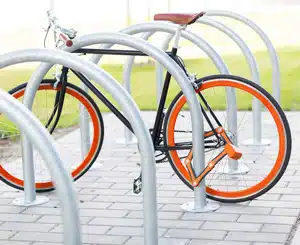
In the complex field of urban planning and high-capacity event management, the “boundary” is a critical point of both safety and logistical friction. While many improvised solutions have been used to guide the public, the industry standard for 2026 has converged on a specific piece of infrastructure: the bike rack barrier. Known for its distinctive vertical infill bars and interlocking hook-and-loop system, this style of barricade provides a unique balance of structural rigidity and operational flexibility. As municipal safety standards become more rigorous, the reliance on these specialized steel frames has expanded from simple concert lines to essential perimeter solutions for transportation hubs, government buildings, and large-scale metropolitan protests.
The Physics of the Interlocking System
The effectiveness of a bike rack style barrier lies in its “unity of strength.” Unlike individual plastic stanchions or unlinked dividers, these steel barriers are designed to interlock, creating a continuous, unbreakable chain. This design prevents a “weak link” in the perimeter where a crowd could potentially push through or create a gap.
The vertical bars are spaced specifically to prevent individuals from climbing through or over the barrier, while the standard height—typically around 43 inches—provides a significant physical deterrent without obstructing the sightlines of security personnel. This visibility is crucial for law enforcement, as it allows for the real-time monitoring of crowd density and behavior from a distance, ensuring that potential “crush” points are identified before they become dangerous.
Engineering for Surface Variables: Flat vs. Bridge Feet
One of the most frequent mistakes in perimeter planning is failing to account for the ground surface. Professional-grade barriers are available with interchangeable base options to suit the environment:
- Bridge Feet: These feature a slight arch, making them ideal for uneven surfaces like grass, gravel, or cobblestones. The “four-point” contact system provides maximum stability against lateral wind or crowd pressure.
- Flat Feet: Designed specifically for flat, high-traffic pedestrian areas, these minimize trip hazards. They are essential for queues where people are walking parallel to the barrier, ensuring that the base does not catch the feet of attendees.
By selecting the correct foot for the terrain, facility managers can significantly reduce liability related to “trip and fall” incidents while ensuring the barrier remains upright even under significant duress.
Hot-Dipped Galvanization and Weather Resilience
Because these barriers are frequently used in outdoor environments, their longevity is tied to their finish. Low-quality barriers often use a “pre-galvanized” process, which can lead to rust at the weld points after just one season of exposure. Professional-grade barriers utilize a “hot-dipped” galvanization process, where the entire steel frame is submerged in molten zinc after it has been welded.
This creates a seamless, corrosion-resistant coating that protects the barrier from the inside out. For coastal venues or cities with high humidity, this investment in material quality ensures that the barriers maintain their structural integrity and professional silver aesthetic for decades. This longevity is a key consideration for municipalities looking to maximize their return on investment for public safety equipment.
The Role of Secondary Customization: Scrim and Jackets
While the primary role of the bike rack barrier is safety, it also serves as a prime piece of “real estate” for information and branding. Custom-fitted vinyl jackets, or “scrims,” can be applied to the barriers to transform them into directional signage or sponsorship displays.
In a high-security environment, these jackets serve an additional purpose: they can be used to obscure the view of sensitive areas, such as backstage zones or VIP entrances. This “visual barrier” reduces the likelihood of “looky-loos” gathering in specific spots, which helps maintain a steady flow of traffic and prevents accidental bottlenecking in high-traffic corridors.
Conclusion: A Foundation of Order
As we look toward the future of public gatherings and urban safety, the tools we use to define our spaces must be both robust and adaptable. The bike rack style barrier remains the gold standard because it respects the physics of the crowd while meeting the logistical needs of the operator. Whether you are securing a city-wide parade or managing a daily transit terminal, the quality of your perimeter determines the safety of your people. For those who require the highest level of durability and professional design in their equipment, Epic Crowd Control offers the mission-ready barriers and expertise necessary to protect and organize any modern environment.
